
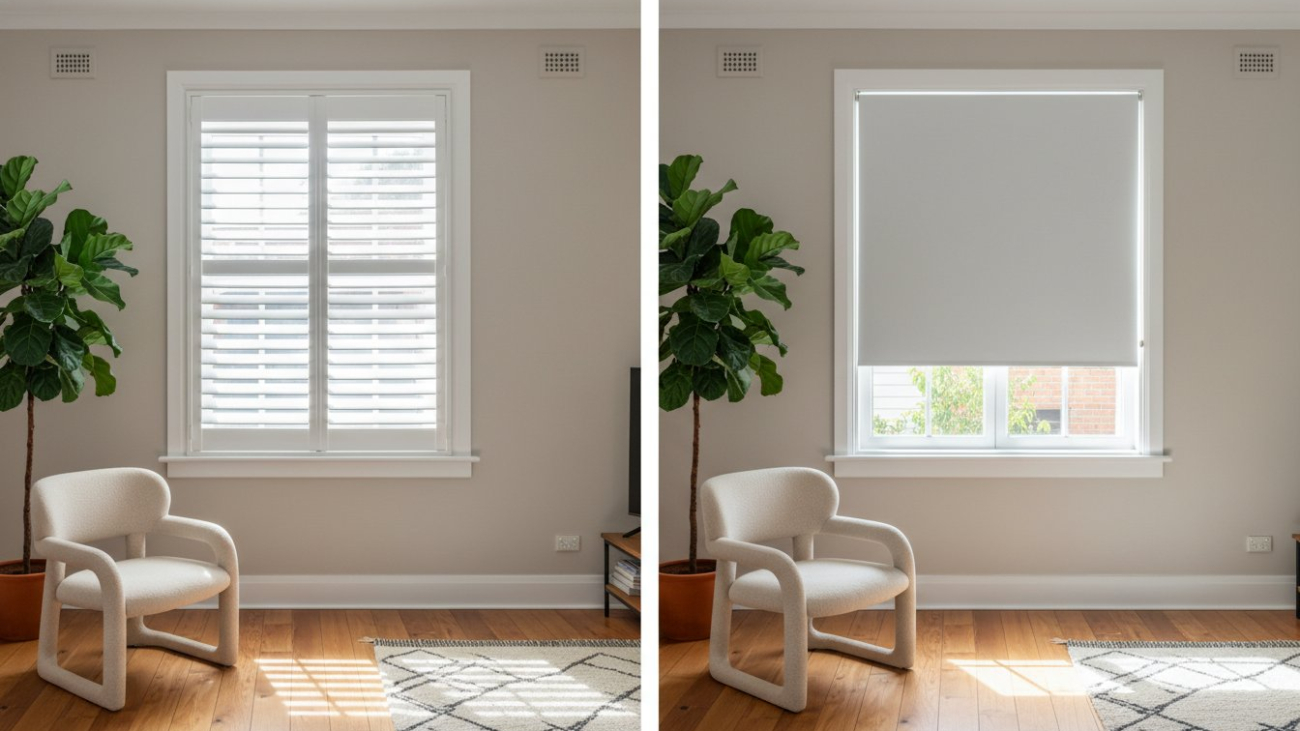
Choosing the perfect window coverings for your home can feel surprisingly overwhelming. It’s a significant decision, and you want to be sure you’re making a smart, long-term investment that you’ll love for years to come. If you’re worried about making a costly mistake or are unsure which option offers the best control over light and privacy, you’re not alone. This is where the classic shutters vs blinds debate begins, and we’re here to help you find the perfect answer for your space.
Think of us as your friendly guide. In this article, we’ll personally walk you through a clear comparison of these two popular choices, looking closely at everything that matters: timeless style, durability, day-to-day function, and of course, the budget. Our goal is to give you the clarity and confidence you need to select a beautiful, made-to-measure solution that feels just right for your home and lifestyle.
At a Glance: The Fundamental Differences Between Shutters and Blinds
Choosing the right window covering can feel overwhelming, but understanding the core differences is the perfect place to start. When it comes to the great shutters vs blinds debate, it’s about more than just looks; it’s about structure, function, and how you want to live in your space. To help you decide, here is a quick comparison of their fundamental characteristics.
| Feature | Shutters | Blinds |
|---|---|---|
| Structure | Solid panels within a permanent frame | Flexible slats or fabric hung from a headrail |
| Operation | Louvres tilt open/closed; panels can swing open | Slats are raised, lowered, or tilted |
| Installation | A permanent, custom-fitted installation | Hung inside or outside the window recess |
| Permanence | Considered a long-term fixture of the home | A furnishing that can be easily changed |
To help you visualise these differences, the video below provides a wonderful overview:
What are Plantation Shutters?
Plantation shutters are solid, stable window coverings built into their own custom-made frame, which is then fitted precisely to your window. They consist of large, adjustable slats (known as louvres) that tilt open and closed to control light and privacy. As detailed in the historical overview for Window Shutters on Wikipedia, they have long been valued for their durability. Typically crafted from timeless timber, moisture-resistant PVC, or sleek aluminium, they are considered a permanent fixture that enhances your home’s architectural character and can even increase its value.
What are Window Blinds?
Window blinds, on the other hand, are made of individual horizontal or vertical slats (like Venetian or Vertical blinds) or a single piece of fabric (like Roller or Roman blinds). They are raised and lowered, or drawn side-to-side, using a cord or wand. Available in a vast array of materials, patterns, and colours, blinds offer incredible design flexibility. From classic timber Venetians to soft fabric Romans, they can be easily updated to match changing decor. Blinds are typically fitted either inside the window recess for a neat look or outside it to maximise light when open.
Aesthetics & Style: Which Best Complements Your Home’s Look?
When deciding between shutters vs blinds, the first consideration for many homeowners is pure aesthetics. It’s about finding the perfect partner for your home’s architecture and your personal style. Do you lean towards timeless structure or flexible, modern design? Your answer will help guide you to the right choice for creating a space you’ll truly love.
The Classic Elegance of Shutters
Shutters are more than just a window covering; they feel like a custom architectural feature. By integrating seamlessly with your window frames, they become a permanent, high-quality addition to your home. Their clean, substantial lines are a perfect match for classic Australian styles like Hamptons, coastal, and traditional homes. While the colour palette is often focused on timeless whites, creams, and natural wood tones, you can customise the look with different louvre sizes—wider louvres lend a more contemporary, open feel. This solid construction not only looks impressive but also provides excellent insulation, a key feature of high-quality Energy-Efficient Window Coverings.
The Versatile Design Freedom of Blinds
If shutters offer classic structure, blinds provide unparalleled design freedom. They are the chameleon of window treatments, available in a nearly endless array of colours, patterns, and textures. You can create any look you desire, from the soft, cascading folds of a Roman blind that adds warmth to a bedroom, to the sleek, minimalist profile of a Roller blind in a modern kitchen. Material choices further enhance this versatility; timber Venetians introduce natural warmth, while slimline aluminium blinds offer an industrial-chic edge. With blinds, you decide if they should be a subtle, neutral backdrop or a bold, fabric-forward statement piece.
Visually, shutters feel substantial and often stand alone as a complete window treatment. Blinds, being more streamlined, pair beautifully with other dressings. Layering a soft sheer curtain over a blockout roller blind, for example, gives you ultimate control over both style and light, creating a truly customised and inviting space.
Functionality: Comparing Light Control, Privacy, and Insulation
Beyond aesthetics, how your window coverings perform day-to-day is what truly shapes your home’s comfort. This is where the practical differences in the shutters vs blinds discussion become clear, helping you choose a solution that perfectly fits your family’s lifestyle.
Mastering Light and Privacy
Shutters offer unparalleled control over the light entering a room. With a simple tilt of the louvres, you can direct sunlight upwards to brighten the ceiling, downwards to avoid glare on screens, or close them completely for a softly diffused glow. For the ultimate in flexibility, tier-on-tier shutters allow you to open the top half to let light in while keeping the bottom half closed for complete privacy—perfect for street-facing living rooms and bedrooms.
Blinds also provide good light management, allowing you to raise, lower, and tilt the slats. However, they can sometimes create a ‘striping’ effect and may allow small slivers of light to bleed through around the edges and cord holes. For those needing total darkness, specialised blackout blinds are an excellent solution, particularly for creating a restful environment in bedrooms.
Energy Efficiency and Insulation
One of the most significant long-term benefits of shutters is their superior insulation. Made from solid materials and fitted precisely to your window frame, they create an effective barrier that traps a layer of air. This helps to keep your home warmer during chilly winters and noticeably cooler through the hot Australian summer, potentially reducing your reliance on heating and air conditioning.
While standard blinds offer a modest level of insulation, they are generally less effective than the solid construction of shutters. The exception is cellular or honeycomb blinds, which are designed with special air pockets that provide excellent thermal efficiency. While the initial investment for shutters can be higher, their energy-saving properties add significant long-term value. For a closer look at the financial aspects, this in-depth cost comparison offers further guidance on budgeting for your choice.
Durability, Maintenance, and Child Safety
Beyond the look and feel, the practical side of window coverings plays a huge role in your long-term satisfaction. When comparing shutters vs blinds, considering how they hold up over time, how easy they are to care for, and how safe they are for your family is essential. This is where the differences truly come to light, helping you make a choice that brings peace of mind for years to come.
Built to Last: Durability and Lifespan
Shutters are often considered a permanent fixture and a long-term investment in your home. Made from robust materials like timber, PVC, or aluminium, a high-quality set of shutters can easily last for decades with minimal care, often adding to your home’s resale value. In contrast, while quality blinds are certainly durable, their moving parts and fabrics are more susceptible to wear and tear. Cords can fray, and fabrics may fade over time with constant exposure to the strong Australian sun.
For humid areas like kitchens, laundries, and bathrooms, materials matter immensely. PVC or aluminium shutters are exceptionally resilient, as they will not warp, peel, or crack in moist environments. Some timber blinds, however, can be at risk of warping in these same conditions, making them better suited to bedrooms and living areas.
Cleaning and Upkeep
Keeping your window coverings looking fresh and clean is another key consideration. Shutters are wonderfully low-maintenance; their solid louvres can be quickly wiped down with a damp cloth, making dusting a simple task. Blinds, especially Venetian styles with their many individual slats, can be more time-consuming to clean thoroughly. While roller blinds are easy to dust, spot-cleaning a stain without leaving a mark can sometimes be challenging, and certain fabric blinds may eventually require professional cleaning.
A Note on Child Safety
For any family with young children, safety is the number one priority. This is an area where shutters truly excel. Their solid, cordless design eliminates the risks of entanglement, making them one of the safest choices available for kids’ bedrooms and play areas.
While older blinds with looped cords posed a significant danger, it’s reassuring to know that all new blinds sold in Australia must comply with strict mandatory safety standards. Modern child-safe options include:
- Motorised systems that operate with a remote control.
- Spring-loaded or chain-free mechanisms.
- Wand controls instead of cords.
When choosing blinds, always ensure they are fitted with the correct safety devices to keep your little ones safe.
Cost & Value: Understanding the Initial Investment and Long-Term Return
When considering shutters vs blinds, one of the first questions that comes to mind is always about the cost. It’s important to be transparent: plantation shutters typically have a higher initial price tag than most blinds. However, viewing this decision purely on upfront cost misses the bigger picture. This isn’t just a purchase; it’s a long-term investment in your home’s quality, comfort, and future worth.
Breaking Down the Upfront Costs
Generally, you can expect custom-fitted shutters to be a more significant initial outlay, often two to three times the cost of standard blinds. This difference is rooted in quality and craftsmanship. Shutters are a bespoke product, involving:
- Premium Materials: Crafted from durable timber or high-grade, moisture-resistant PVC.
- Custom Manufacturing: Each shutter is made-to-measure for a perfect, seamless fit in your unique window frames.
- Professional Installation: This is standard for shutters, ensuring flawless operation and longevity.
Blinds, on the other hand, offer a vast price range, from affordable, off-the-shelf options to high-end custom varieties. To truly understand the figures for your own home, the best first step is to request a free measure and quote.
Return on Investment: More Than Just a Window Covering
This is where the true value of shutters shines. Unlike blinds, which are often seen by potential homebuyers as a personal decorative choice that will likely be replaced, plantation shutters are considered a permanent, structural upgrade. They are an asset that can genuinely increase your home’s appeal and resale value.
Their durability means they are built to last for years, eliminating the recurring cost of replacing worn or dated blinds. Furthermore, their superior insulation properties help keep your home cooler in summer and warmer in winter, leading to noticeable savings on your energy bills over time. In the long-running comparison of shutters and blinds, the initial investment in shutters pays you back through enhanced property value, energy efficiency, and timeless style that endures.
Final Verdict: Which is Best for Your Room?
Choosing between shutters and blinds can feel like a big decision, but the right answer truly comes down to you, your home, and your priorities. Think of shutters as a long-term, architectural investment that adds structure and value, while blinds offer wonderful versatility, colour, and affordability. To help you make the final call, we’ve broken it down by your needs and your rooms.
Choose Shutters if…
- You’re looking for a durable, long-lasting window treatment that adds to your property’s value.
- Precise light and privacy control is your top priority.
- You want a timeless, classic look that integrates with your home’s architecture.
- Excellent insulation and some noise reduction are important to you.
Choose Blinds if…
- You’re working with a specific budget and need a cost-effective solution.
- You love having a wide range of colours, patterns, and materials to choose from.
- You want a simple, functional option like a blackout blind for a bedroom.
- You enjoy updating your interior style every few years.
For Living Rooms and Main Areas
Shutters create an undeniable ‘wow’ factor and offer sophisticated light control for entertaining or relaxing. They are incredibly durable for busy family spaces. Alternatively, a beautiful set of Roman or Venetian blinds can perfectly tie your room’s colour palette together, offering a softer, customised touch.
For Bedrooms
For a peaceful night’s sleep, shutters are a dream. They provide exceptional room darkening and can help muffle outside noise. If you’re on a tighter budget, a made-to-measure blackout roller blind is a fantastic and highly effective alternative that ensures complete privacy and darkness.
For Kitchens and Bathrooms
In high-humidity areas, material choice is everything. We recommend moisture-resistant options like durable PVC shutters or classic aluminium Venetian blinds. These materials won’t warp, peel, or crack from steam and splashes, unlike real timber or soft fabric blinds, which should be avoided in these zones.
Ultimately, the shutters vs blinds discussion is settled by what works best for your lifestyle. Both can be beautiful and practical additions to your home. If you’d like some personal advice on creating the perfect made-to-measure solution, our friendly team at Chillipip Designs would be delighted to help.
The Final Verdict: Choosing Your Perfect Window Covering
Ultimately, the debate of shutters vs blinds comes down to your home’s unique character, your functional needs, and your long-term vision. Shutters offer a timeless, architectural elegance and are a lasting investment in your property’s value. Blinds, on the other hand, provide sleek, modern versatility with an endless array of styles and colours. The perfect choice is the one that brings you the most comfort and joy every day.
At Chillipip, we believe the best decision is an informed one. As a proudly Australian-owned family business, we have spent over 20 years crafting custom-made solutions for Sydney homes. Our experience is your peace of mind, and we are dedicated to helping you find a window treatment that you’ll be truly delighted with.
Explore our custom-made shutters and blinds to find your perfect fit.
Let us help you make your house feel even more like a home.
Frequently Asked Questions About Shutters and Blinds
Are shutters more expensive than blinds?
Yes, shutters typically represent a higher initial investment. As a permanent, custom-fitted fixture made from durable materials like timber or high-grade PVC, they are built to last for years. For a standard window, blinds might cost between A$300-A$700, whereas quality plantation shutters could range from A$800 to A$1,500. While the upfront cost is greater, their longevity, durability, and positive impact on home value make them a worthwhile investment for many Australian homeowners.
Which is easier to clean, shutters or blinds?
Shutters are wonderfully simple to maintain. Their wide, solid louvres can be quickly wiped down with a duster or a soft, damp cloth, making cleaning a breeze. Blinds, particularly Venetian styles with many narrow slats and cords, tend to collect more dust and can be more time-consuming to clean thoroughly. For a low-maintenance solution that keeps your home looking fresh and polished, shutters are often the preferred choice for effortless upkeep.
Do plantation shutters add value to a home?
Absolutely. Plantation shutters are viewed by property experts and potential buyers as a premium, permanent upgrade. Much like a renovated kitchen or quality flooring, they add significant kerb appeal and a sense of timeless elegance to a home. Because they are custom-made and built to last, they are a highly desirable feature that can genuinely increase your property’s market value, making them a wise and lasting investment in your home.
Which is better for completely blocking out light?
When it comes to the debate of shutters vs blinds for light blocking, a dedicated blackout roller blind is often the most effective option for achieving near-total darkness. While shutters offer excellent light control and can darken a room significantly, small slivers of light may still filter through between the louvres. For bedrooms or media rooms, many homeowners choose to pair shutters with a blackout blind or curtain to enjoy both beautiful style and complete darkness.
Can you have both shutters and curtains on the same window?
Yes, you certainly can, and it’s a stunning way to create a layered, designer look in your home. This combination offers the best of both worlds: shutters provide precise control over light and privacy, while curtains add softness, texture, and a touch of colour to your decor. Pairing them is a popular choice for bedrooms and living areas, allowing you to create a space that feels both perfectly functional and truly comfortable.
Are shutters and blinds safe for children and pets?
Your family’s safety is the top priority. Shutters are an exceptionally safe choice for homes with children and pets because they are inherently cord-free, eliminating any potential entanglement hazards. While modern blinds sold in Australia must comply with strict safety standards and often come with cordless options or safety cleats, the built-in, cord-free design of shutters provides that extra layer of reassurance and complete peace of mind for any parent or pet owner.